
PM4TheWorld Webinar Series: When Project Management Meets Human Dignity

This week’s PM4TheWorld webinar was, in many ways, a reminder of why this platform exists.
At PM4TheWorld, we often speak about the role project management can play in advancing social impact, sustainability, and meaningful change. We discuss frameworks, models, governance, partnerships, and execution. All of that matters. But every now and then, a conversation brings us back to something more fundamental: behind every project, every system, and every methodology, there are human lives.
That was the real heart of this session.
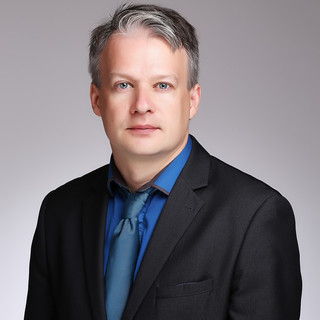
I had the privilege of welcoming Lee Lambert for a powerful and deeply human conversation about his connection with New Life for Orphans in Uganda, and about the role project management professionals can play when they choose to bring their discipline, energy, and compassion into service of others.
Lee hardly needs an introduction in the project management profession. As a PMI Fellow, one of the founding figures behind the PMP(tm), and a lifelong advocate for the power of project management, he has spent decades helping people understand how structured thinking and disciplined execution can create better outcomes. But what came through most strongly in this conversation was not simply Lee’s professional legacy. It was his conviction that project management is not confined to corporate programs, delivery frameworks, or organizational transformation. It is, at its core, a way of creating order, progress, and possibility in situations where people need it most.
Lee shared how his connection to Uganda began almost unexpectedly, during travels across Africa where he was asking a simple question: where are the needs, and where can others help? That search led him to New Life for Orphans, and to Davis, the organization’s executive director, who had himself grown up in the orphanage and now leads it with extraordinary dedication. What began as an encounter became a friendship, and then a commitment to support the children and the organization in practical, sustained ways.
What made the conversation especially meaningful was that it never drifted into abstract charity language. It stayed grounded in reality.
The needs are immediate and tangible: food, beds, school fees, infrastructure, windows, gutters, water access, and the everyday costs of caring for children whose lives are shaped by uncertainty. But what emerged very clearly from the discussion was that the issue is not only the existence of need. It is the difficulty of planning when support is inconsistent. One-time generosity matters, of course, but irregular giving makes long-term execution harder. And that is where the language of project management becomes surprisingly relevant. Planning, sequencing, resource allocation, prioritization, and sustainability all depend on some degree of predictability. Without that, even the most dedicated leader is forced into permanent improvisation.
That point was reinforced powerfully by Lacey Swartz, who has supported Davis and New Life for Orphans for years and offered a perspective shaped by long-term relationship, due diligence, and practical engagement. Her testimony added both credibility and depth to the conversation. She spoke about the careful process through which she first verified the legitimacy of the work, the years of monthly support that followed, and the gradual progress that support has made possible, including the construction of buildings and, most recently, the funding of a second water tank. Most importantly, she reminded us that these children are not a “charity case.” They are human beings with dignity, value, and potential. The goal is not dependency. The goal is self-sufficiency, and support must be designed with that in mind.
That, for me, was one of the most important themes of the session.
Too often, social impact conversations become trapped between two extremes: emotional appeals on one side, and technical program design on the other. What this discussion illustrated is that both matter, but neither is enough on its own. Compassion without structure struggles to scale. Structure without humanity misses the point. What organizations like New Life for Orphans need is support that respects dignity while also enabling better planning, stronger delivery, and longer-term capacity building.
This is where project management can become more than a profession. It can become a lever for empowerment.
Lee made that case in a way that was both simple and profound. In his view, everything is a project. Building facilities is a project. Improving living conditions is a project. Developing young people’s futures is a project. Creating pathways to professional opportunity is a project. And when those projects are managed well, more can be achieved with the same resources, in less time, and with greater benefit for everyone involved. He also raised a powerful longer-term idea: introducing young people to project management not only as a way of thinking, but potentially as a career path. In contexts where local project management capabilities are still developing, this becomes more than education. It becomes an opportunity to shape future livelihoods and future leadership.
That idea resonated strongly with the discussion that followed. We explored the reality that today’s donors increasingly want more than a general appeal. They want programmatic clarity. They want defined initiatives, expected benefits, concrete deliverables, and visible pathways from funding to outcomes. That does not diminish generosity. It simply means that good intentions must now be translated into coherent projects. In that context, ongoing support for education and food emerged as two of the clearest and most compelling areas for structured donor engagement. They are not one-off needs. They are continuous commitments, and they can be framed accordingly.
Another important part of the discussion focused on trust, transparency, and the infrastructure required to support international giving responsibly. Lacey explained the work that had gone into finding a credible umbrella structure capable of receiving donations with proper accounting and oversight, eventually resulting in a UK-based channel through Afrinspire. That kind of backbone may sound administrative, but it is essential. In social impact work, trust is not a secondary consideration. It is part of the delivery model itself.
The exchange also opened the door to something broader. During the conversation, possibilities emerged around connecting this work with project management networks, educational initiatives, and potentially other organizations that could help bring more structure, more visibility, and more support to the effort. That, too, is part of what PM4TheWorld is meant to enable. Not simply discussion, but connection. Not simply reflection, but mobilization.
And then, at the end, the discussion gave way to something no framework can quite capture.
Davis came off mute. The children behind him waved, introduced themselves, smiled into the camera, and reminded all of us that beyond the language of strategy, projects, donors, and systems, this is ultimately about young lives, real futures, and the quiet extraordinary work of people who keep showing up for others. The session ended not with theory, but with gratitude, with song, and with a sense of shared humanity that no polished presentation could have improved upon.
For me, that was the real lesson of the webinar.
Project management is often associated with precision, control, rigor, and results. And rightly so. But perhaps one of its highest uses is not simply to help organizations deliver better. It is to help communities endure, grow, and imagine something beyond survival. When discipline is placed in service of dignity, project management becomes more than a method. It becomes an instrument of hope.
That is the kind of impact PM4TheWorld wants to keep putting in front of this community.
Not impact as a slogan.
Not impact as a branding device.
But impact as a lived reality, made possible when people choose to care, to organize, and to act.
That is how projects become service.
That is how service becomes transformation.
And that is how, little by little, we help build a better world.



Comments