
Turning SDG Ambition into Action
Updated: Aug 9

A Conversation with Chienie Tsai on ESG, Leadership, and the Practical Work of Sustainable Development
The Sustainable Development Goals give us a language.
They help us name the future we want to build. They give structure to our aspirations for a world that is more inclusive, more responsible, more equitable, more sustainable, and more resilient. They create a shared vocabulary across sectors, cultures, geographies, and institutions.
But a shared language is not enough.
The real challenge begins when ambition has to become action. When an organization moves from displaying the SDG wheel to asking what it is actually changing. When a company, nonprofit, university, community group, or public institution begins to ask not only which goals it supports, but what it is doing, how it is doing it, who is involved, how progress is measured, and how the work can be sustained over time.
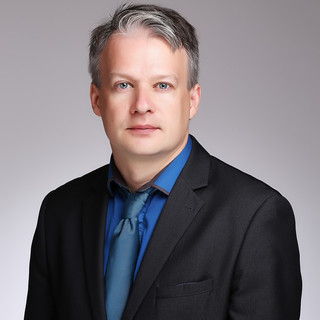
That was the heart of our PM4TheWorld conversation with Chienie Tsai, Founder and Managing Director of the Global ESG Leadership Organization.
The discussion started with a simple but important distinction. The SDGs describe the ambition. ESG provides one of the practical languages through which organizations can translate that ambition into decisions, systems, programs, partnerships, and measurable outcomes. In other words, the SDGs help define where we want to go. ESG, when used meaningfully, can help organizations understand how to move.
But Chienie’s perspective was also clear: ESG cannot be reduced to reporting. It cannot become only a technical exercise, a compliance requirement, or a language reserved for experts. If ESG becomes disconnected from people’s daily work, community needs, and organizational practice, it risks becoming another layer of abstraction. The purpose is not to produce better reports. The purpose is to produce better impact.
Chienie’s own journey reflects that movement from business experience to sustainability action. Before founding the Global ESG Leadership Organization, she spent years in the fashion and luxury sectors, including work connected to the development of major international brands in the China market. She later built her own fashion jewelry business, opening more than 200 retail shops across online and offline channels.
That experience gave her a close view of the realities behind products, supply chains, factories, materials, labor conditions, and business growth. The business was successful, but success also raised deeper questions. Was profitability enough? Was this the only way to build and scale a business? Could business become a vehicle not only for value extraction, but for community benefit and social responsibility?
Those questions eventually led her toward sustainability, ESG, and global ecosystem building.
One of the most powerful parts of the conversation was that Chienie did not present ESG leadership as something that starts with expertise. In fact, she openly described how, at the beginning of this new journey, she was not yet an ESG expert. She studied, learned, built credentials, experimented, and listened. But the driving force was already there: the belief that business and leadership can, and should, contribute to a better world. That point matters.
Too often, organizations wait for perfect clarity before they begin. They wait for the complete framework, the full funding package, the fully staffed department, the flawless dashboard, or the external mandate. Meanwhile, the distance between ambition and action grows wider.
Chienie’s experience suggests a different path. Start with purpose. Start with people. Start with learning. Start by connecting those who care but may not yet know how to act.
The Global ESG Leadership Organization has developed its work around a simple progression: connect, share, learn, act, and lead. That sequence is important.
Connection comes first because sustainable development cannot be implemented in isolation. ESG action requires the participation of different sectors, including business, public institutions, nonprofits, academia, local communities, and international platforms. It requires the ability to bring together people who understand policy, people who manage organizations, people who experience problems directly, people who can mobilize resources, and people who can design and implement practical solutions.
Sharing comes next because many organizations are not lacking good intentions. They are lacking usable examples. They need to see what others have tried, what worked, what failed, what technologies were used, what partnerships were built, what barriers appeared, and what adjustments were necessary. In this sense, practical case sharing becomes a form of capacity building.
Learning then becomes collective rather than individual. It is not only a training session or a one-time event. It is an ongoing community process in which people come back, refresh their knowledge, compare experiences, and continue to evolve.
Action follows from that shared learning. But action, in Chienie’s view, is not the end of the process.
The final step is leadership.
This is where her concept of micro-leadership becomes especially relevant. Sustainable development cannot depend only on formal leaders, global institutions, large corporations, or major funders. It also depends on people in local communities, small businesses, youth networks, women-led initiatives, educational institutions, and civil society organizations who are willing to take responsibility for change in their own sphere of influence.
That idea resonates deeply with the mission of PM4TheWorld.
Projects are the mechanism through which many ambitions become real. A policy does not implement itself. A strategy does not deliver itself. A goal does not change lives simply because it has been endorsed. Somewhere, people must define the work, align stakeholders, organize resources, manage constraints, measure progress, learn from reality, and adapt.
This is where project management becomes central to sustainable development.
When we discussed the implementation gap, Chienie pointed to one of the recurring problems: SDGs and ESG are often treated separately. Organizations may speak about the SDGs as a broad aspiration, while ESG remains confined to reporting, compliance, or expert-driven processes. The result is a gap between the language of global goals and the language of organizational action.
Bridging that gap requires translation.
It requires taking the ambition of the SDGs and converting it into programs, initiatives, dashboards, learning systems, community engagement mechanisms, and decision frameworks. It requires making ESG understandable and usable by people who are not ESG specialists but who are responsible for real work inside real organizations.
This is also why Chienie emphasized the importance of structured, practical cases. Numbers matter. Reporting matters. Measurement matters. But behind every number there must be a footprint, a blueprint, and a story of how impact was created. What was the problem? What was the approach? What resources were mobilized? What challenges emerged? What changed? What can others learn from it?
Without that practical layer, sustainability remains too distant from implementation.
The conversation also explored why women and youth are so central to the Global ESG Leadership Organization’s initiatives. Chienie described work connected to financial literacy, entrepreneurship, women’s leadership, SDG education, and economic empowerment. The reason is not that these groups are the only focus of sustainable development. Rather, they are essential because they often sit at the intersection of opportunity, vulnerability, creativity, and long-term social change.
Youth bring energy, imagination, and a direct stake in the future being shaped today. Women, particularly in many economic and community contexts, are often powerful multipliers of social and economic impact when access, confidence, education, and resources are strengthened.
But Chienie’s message was not only about helping women and youth. It was also about creating spaces where they can speak, lead, build, and participate in shaping the systems that affect them.
That distinction is important.
Sustainable development cannot be something done for communities without communities. It cannot be designed only from boardrooms, conferences, or policy spaces. It must include the people whose lives, futures, and opportunities are directly connected to the issues being addressed.
This led naturally to the topic of measurement.
Chienie spoke about the need for impact dashboards that are relevant to the initiative being pursued. There is no universal dashboard that fits every program. The right measures depend on the purpose of the initiative, the people it is trying to reach, the outcomes it seeks to create, and the kind of change it is designed to support.
For some initiatives, reach and accessibility may be central. For others, the key question may be what participants take away, whether their capacity increases, whether they remain connected to a community of practice, or whether they begin to act differently as a result.
This is a useful reminder for anyone working with SDG-related projects. Measurement should not be added at the end as an afterthought. It should be part of the design. But it should also remain connected to meaning. A dashboard is only useful if it helps people understand whether the work is making a difference and how it can improve.
One of the strongest closing reflections came when Chienie was asked where organizations should start if they want to move their SDG ambition into action.
Her response was practical and direct: do not begin by complaining that the goal is too far away, do not begin by worrying too much about tomorrow, and do not wait for funding to appear before starting.
This does not mean funding is irrelevant. Resources matter. Scale matters. Sustainability requires economic realism. But too many initiatives never begin because people assume that action is impossible without perfect conditions.
The first step is often smaller than we think.
Start by connecting people. Start by sharing knowledge. Start by identifying one practical problem. Start by building one learning community. Start by documenting one case. Start by asking what can be done now with the resources, relationships, and credibility already available.
Then build from there.
At PM4TheWorld, this is precisely the kind of conversation we want to continue hosting. Sustainable development is not only a matter of declarations. It is a matter of execution. It requires governance, leadership, measurement, partnership, and project capability. It requires the courage to move from the language of aspiration to the discipline of implementation.
The SDGs give us the destination.
ESG can help organizations build a practical language for action.
Project management helps turn that language into work.
And leadership, especially the kind of leadership that connects, shares, learns, acts, and empowers others to lead, is what makes the work sustainable.
The challenge is not only to believe in the Sustainable Development Goals.
The challenge is to make them happen.
You can also watch the video recording of the webinar here: https://www.pm4the.world/previousevents



Comments